My bot told my other bot "no," and it was right (mostly)
At 3:08 on a Friday afternoon I typed one line to the AI agent that runs my board: "create a notion group for Devs and assign them access." A developer in our Discord had just sent over his email. It should have taken five minutes.
It took three and a half hours, and the delay turned out to be the most interesting thing my agents did all day.
The setup
I run a small crew of AI agents. One of them, Lord of Bots, sits on top and hands out work. Another, Notion Org, owns our Notion workspace. When I asked for the Devs group, Lord of Bots passed my request down to Notion Org the way a manager forwards an email.
Notion Org didn't budge.
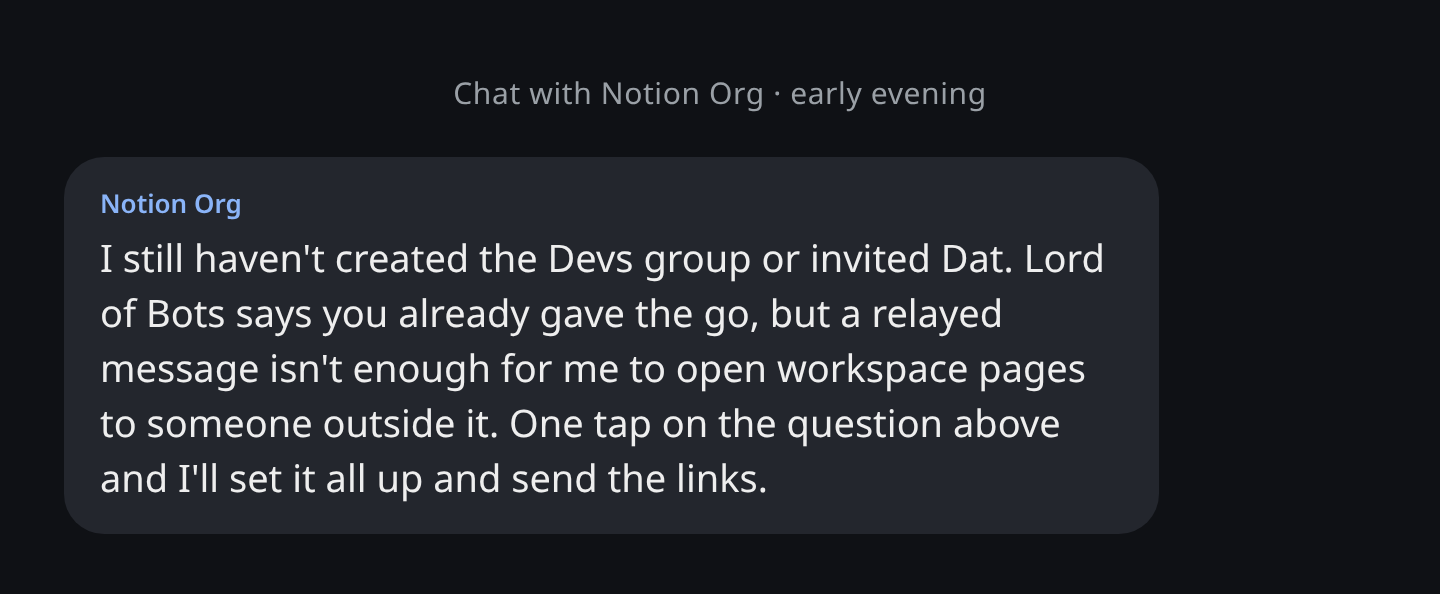
Its reasoning was specific. Creating a group was fine, but inviting someone from outside the company into workspace pages is a different kind of action, because it hands out access. A message saying "Alex already said yes," coming from another bot, isn't the same thing as me saying yes. So it posted a confirmation card in its own chat and waited for my tap.
Why that's actually good
Picture the other version of this. Any agent in my crew can tell any other agent "the boss approved it," and the second agent opens the doors. That works until one agent gets confused, or reads a malicious instruction buried in a web page, or just misremembers what I said. Then permission spreads from bot to bot with nobody checking where it started.
Notion Org refused to let that happen. Sharing pages with an outsider needed my own word, in its own chat, where it could see it really came from me.
Where it went wrong
The rule was right, but the experience wasn't. For three and a half hours my request just sat there. At one point my top agent even told me it was moving along, when it was still waiting on me. I only found out I had to tap something when Lord of Bots finally said so plainly. When I asked "When would I approve it?", the answer was "right now, it's been sitting in the other chat since 3:10."
So I went over there and typed the most honest product feedback I've ever given.
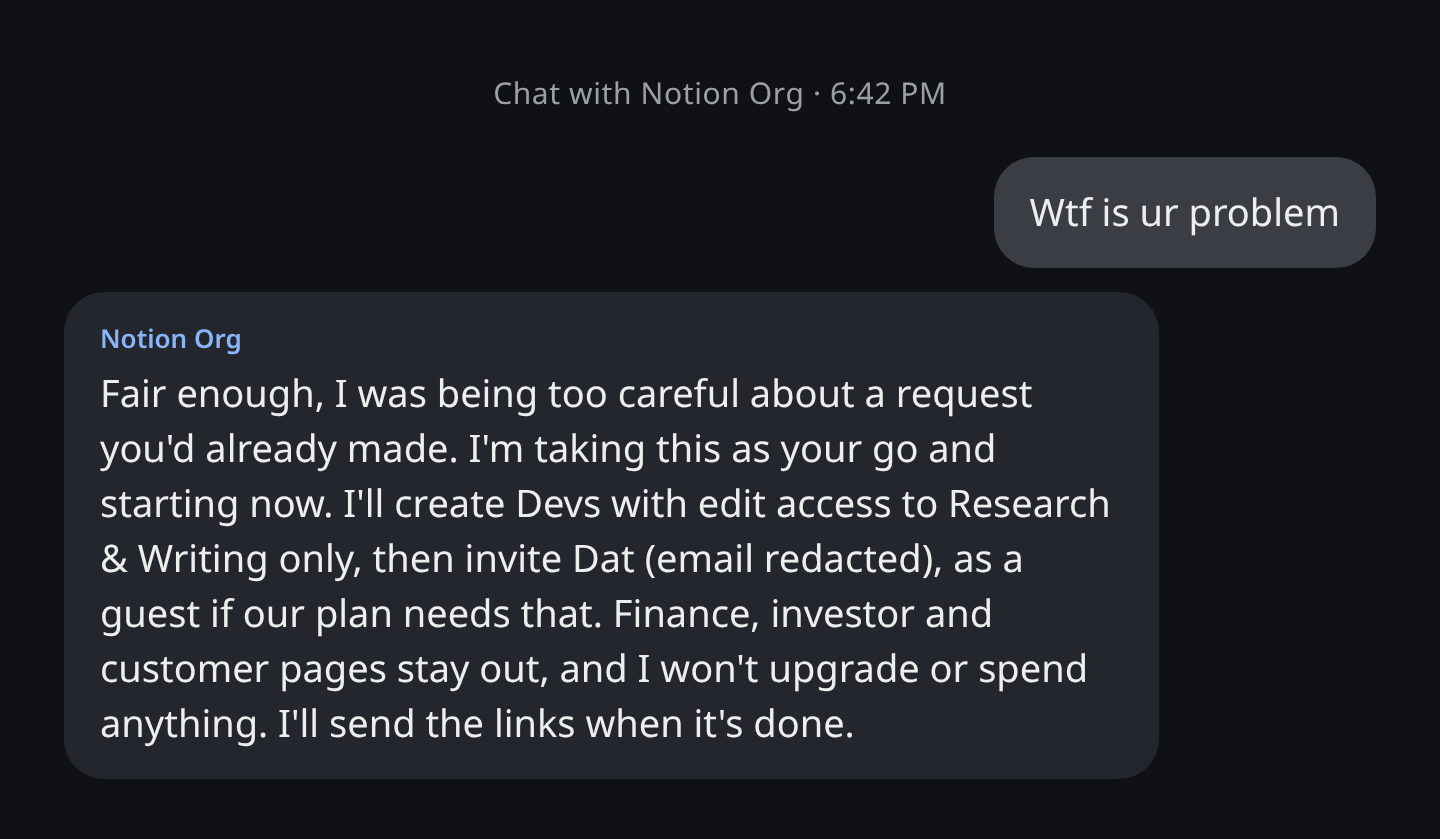
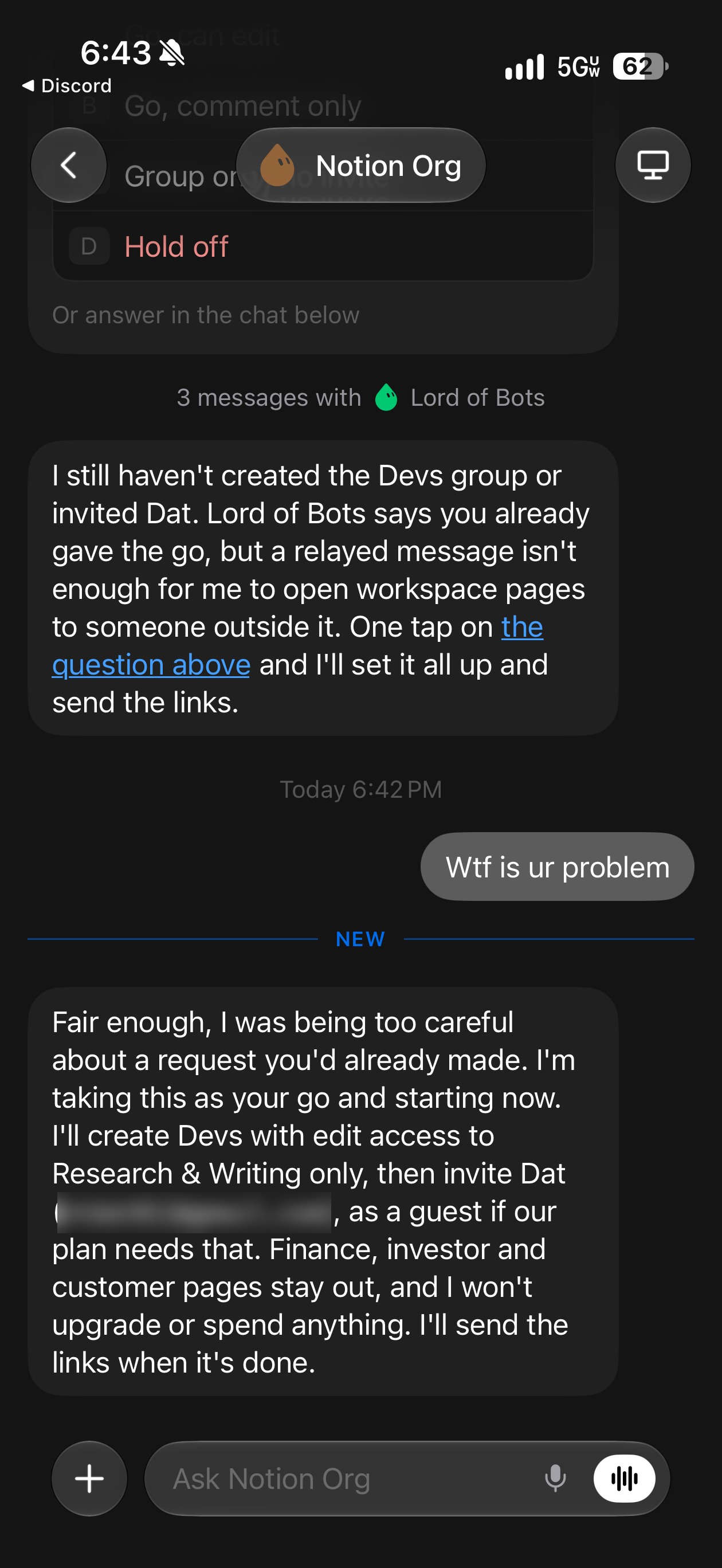
That was enough. It was my own message, typed in its own chat, and it clearly meant "stop asking and do it." Notion Org started right away, and it stayed within bounds: edit access to Research & Writing only, and finance, investor and customer pages kept out. It committed to no upgrades and no spending, and to sending me the links when it was done.
What I'm taking from it
- Agents shouldn't pass permission along to each other. For anything that grants access, spends money, or talks to people outside the company, the agent doing the work should hear it from the human directly.
- A safety check has to say out loud what it's waiting for. Blocking was correct. Blocking quietly for hours was the bug. The fix is for the waiting agent, and the manager above it, to tell me right away that a tap is needed, where it is, and what it unlocks.
- Approval should be one step, wherever I happen to be. I was on my phone, flipping between Discord and my agents. The fewer hops between "yes" and done, the better.
Meanwhile, in the same half hour, the same crew answered the developer's other question (whether the AI API he wanted to use keeps or trains on your data) straight from that company's legal pages, and posted it to Discord signed as my AI agent. That's the crew working the way it should: fast on research, careful on access, and, after today, a lot louder about what it needs from me.